Boiler Replacement in Todt Hill, Staten Island
When a central heating plant on a Todt Hill property reaches the end of its useful service life, continuous patch repairs become an inefficient and stressful cycle. The expansive custom residences, sprawling ranches, and hilltop estates throughout Todt Hill—along Dalemere Road, Ocean Terrace, and Benedict Road—require high-capacity heating plants capable of warming multiple floors, wings, and radiant zones reliably. When heat exchangers crack, internal corrosion compromises the pressure vessel, or seasonal fuel consumption climbs excessively, investing in professional boiler replacement restores dependable warmth, combustion safety, and long-term energy savings.
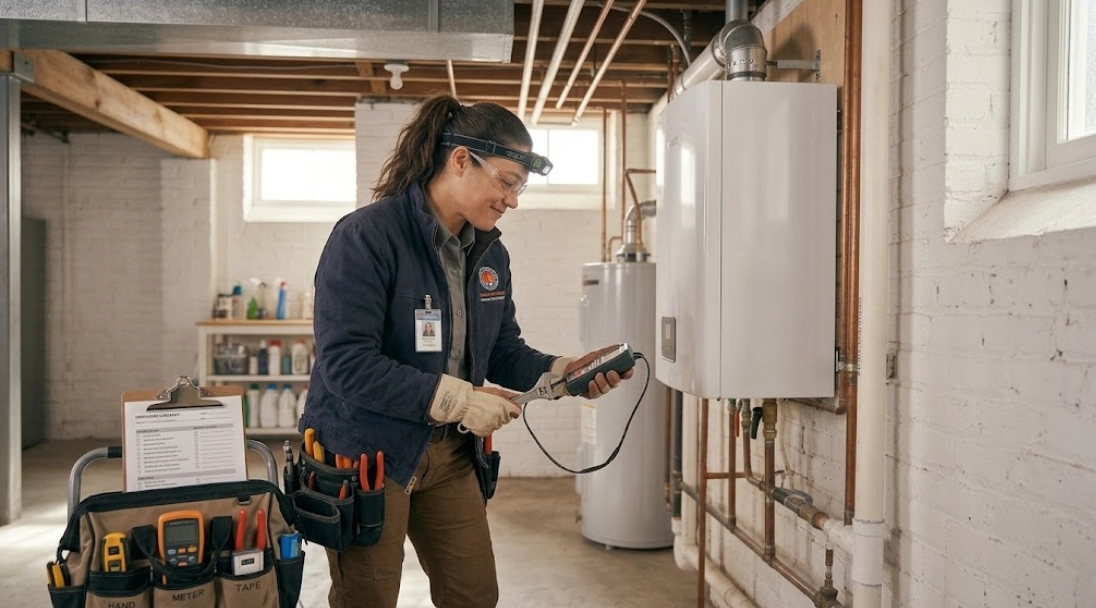
Recognizing When Replacement Outweighs Further Repair
Determining whether to continue repairing an existing heating system or proceed with a full replacement requires evaluating mechanical condition against future reliability. While isolated issues like zone valve actuators, circulator relays, or relief valves are routinely repaired on younger systems (as detailed in our boiler repair in Todt Hill guide), aging units present unmistakable signals that replacement is the wiser choice:
- Cast-Iron Section Fractures: Water leaking between cast-iron boiler block sections or through the combustion chamber wall cannot be welded or sealed safely. Once a pressure vessel is cracked, replacement is mandatory.
- Equipment Age Past 20 to 25 Years: Older cast-iron atmospheric boilers generally operate at 60% to 70% AFUE. Upgrading to a modern modulating-condensing unit operating at 90% to 95%+ efficiency significantly reduces gas consumption across large homes.
- Frequent Mid-Winter Breakdowns: If you are constantly resetting safety lockouts, experiencing uneven heating across wings, or calling for emergency repairs during every cold spell, the heating plant has reached the end of its reliable operational life.
- Obsolete Replacement Components: When electronic ignition modules, gas valves, or burner trays for older units are discontinued, sourcing parts delays emergency heat restoration.
Engineering Matters: Correct Sizing vs. the Myth of Oversizing
One of the most damaging misconceptions in residential heating is that installing a larger boiler is automatically better. In reality, oversizing a boiler causes severe operational problems:
Hydronic System Sizing: In hot-water systems, an oversized boiler generates heat far faster than the building's baseboards or radiant loops can absorb it. The boiler rapidly hits its high-limit aquastat and shuts down, only to fire again minutes later. This short-cycling wastes immense amounts of fuel, subjects heat exchangers to extreme thermal stress, and results in wide temperature swings. We perform comprehensive heat-loss load calculations (Manual J methodology) accounting for square footage, window surfaces, wall insulation, and exterior exposure along the windy Staten Island Greenbelt ridge.
Steam System Sizing: In properties equipped with classic cast-iron radiators, the replacement boiler must be sized strictly to the Connected Radiator Load, measured in Equivalent Direct Radiation (EDR). Undersizing leaves top-floor radiators freezing cold, while oversizing causes loud water hammer, short-cycling, and high operating pressures. Learn how we evaluate radiator balance on our steam heat and radiator repair page.
Venting, Chimneys, and Oil-to-Gas Conversions
A successful boiler replacement requires evaluating the entire exhaust and fuel infrastructure:
- Chimney Lining Compatibility: Transitioning to a high-efficiency gas boiler often requires relining older masonry chimneys with a certified stainless steel chimney liner. High-efficiency systems produce cooler flue exhaust with elevated moisture content; venting into an unlined masonry flue allows acidic moisture to condense and erode mortar.
- Oil-to-Gas Conversions: For estate properties transitioning away from fuel oil, converting to natural gas eliminates fuel deliveries, reduces burner soot, and frees valuable basement square footage. We coordinate gas supply load calculations and meter verifications alongside our gas line repair and inspection specialists.
Permits, Licensing, and Installation Planning
Boiler installations in New York City are strictly governed to protect life safety. Every boiler replacement requires filing work permits with the NYC Department of Buildings (DOB). The installation must be executed by or under the direct supervision of an appropriately licensed master plumber. Following installation, gas piping connections and boiler safety interlocks undergo mandatory high-pressure testing and official DOB sign-off inspections.
What Influences the Overall Cost of Boiler Replacement?
Without inventing arbitrary pricing, several real-world variables govern the scope and investment required for a Todt Hill property:
- Equipment Capacity and Technology: High-efficiency modulating-condensing wall-hung boilers versus high-mass atmospheric cast-iron units differ in equipment and venting requirements.
- Near-Boiler Piping and Manifolds: Reconstructing the mechanical room header piping, installing primary/secondary pumping loops, updating zone valves, and adding magnetic dirt separators to protect high-efficiency heat exchangers.
- Site Accessibility & Heavy Equipment Removal: Rigging out an older 800-pound commercial-grade cast-iron boiler from a basement mechanical room requires specialized equipment and precautions.
- DOB Filing and Gas Utility Coordination: Municipal permit processing, chimney certifications, and National Grid gas service coordination.
Frequently Asked Questions About Boiler Replacement
Oversizing a replacement boiler is a frequent engineering mistake. An oversized boiler heats water faster than the building's radiation can dissipate it, causing rapid short-cycling, excessive fuel consumption, premature heat exchanger stress, and uneven room temperatures. Accurate load calculations ensure the equipment matches actual thermal demands.
Boiler replacements in New York City require filing work permits with the NYC Department of Buildings (DOB). Plumbing connections and fuel gas modifications must be executed by or under the direct supervision of a licensed master plumber, followed by mandatory pressure testing and DOB final inspections.
Often, yes. High-efficiency gas appliances extract more heat, creating cooler flue exhaust gases with higher moisture content. When vented into unlined or oversized terra-cotta masonry chimneys common in older Todt Hill homes, acidic condensation can deteriorate the brickwork. Installing a certified stainless steel liner protects chimney structure.
Converting from oil to gas involves verifying gas service line capacity from National Grid, installing appropriate gas supply piping to the mechanical room, safe decommissioning or removal of existing basement or buried oil tanks, and selecting a modulating boiler that delivers optimal fuel efficiency.